Ladytron is a British electronic band that was formed in Liverpool in 1999. The band consists of four members - Helen Marnie, Mira Aroyo, Daniel Hunt, and Reuben Wu.
The band's name is derived from the song "Ladytron" by Roxy Music. Ladytron music is a blend of new wave, synth-pop, and electronic dance music. Their music is known for its use of vintage synthesizers and drum machines, combined with haunting vocals and atmospheric soundscapes.
Ladytron has released seven studio albums to date, with their self-titled debut album being released in 2001. Some of their most popular songs include "Destroy Everything You Touch," "Ghosts," and "Seventeen."
The band has also gained a reputation for their visually stunning live performances, featuring elaborate light shows and projections.
Ladytron has been influential in the development of electronic music, and their music has been featured in a variety of films, TV shows, and commercials. Ladytron is a highly regarded electronic band that has made a significant contribution to the music industry.
Ladytron announced their new album in October 2022. The album, titled Time’s Arrow, is their seventh studio album and the first release since their 2019 album Ladytron. The album title Time's Arrow refers to the concept of time as an irreversible, unidirectional force. The idea that time only moves forward and never backwards is a central theme throughout the album's lyrics.
The band announced the album via their social media channels, including Facebook, Twitter, and Instagram.
The album was produced by Jim Abbiss, who has previously worked with the Arctic Monkeys and Adele. It features 13 tracks, including the singles "The Animals" and "Far From Home".
The band described the album as a return to their "heavier, darker" sound, with more emphasis on their electronic roots. The album has been well-received by both fans and critics, with many praising the band's ability to evolve their sound while still staying true to their roots.
Time’s Arrow released on January 20, 2023.
City of Angels
City of Angels is a hauntingly beautiful track that showcases the band's ability to create an atmospheric sound that draws listeners in. From the moment the song begins, the listener is transported to a different world, one that is both dark and alluring.
The track starts with a simple, yet powerful beat that is quickly joined by a haunting melody played on a synthesizer. The vocals are delivered with a detached and almost robotic quality that adds to the otherworldly feel of the song. The lyrics describe a city that is both beautiful and dangerous, where the streets are lined with broken dreams and shattered hopes.
As the song progresses, the instrumentation builds, with layers of synths, guitars, and drums adding to the overall sound. The chorus is particularly powerful, with the vocals soaring over the driving beat and the swirling synths. The bridge section of the song is particularly effective, with a breakdown that strips away the layers of sound, leaving just the vocals and a simple melody played on a synth.
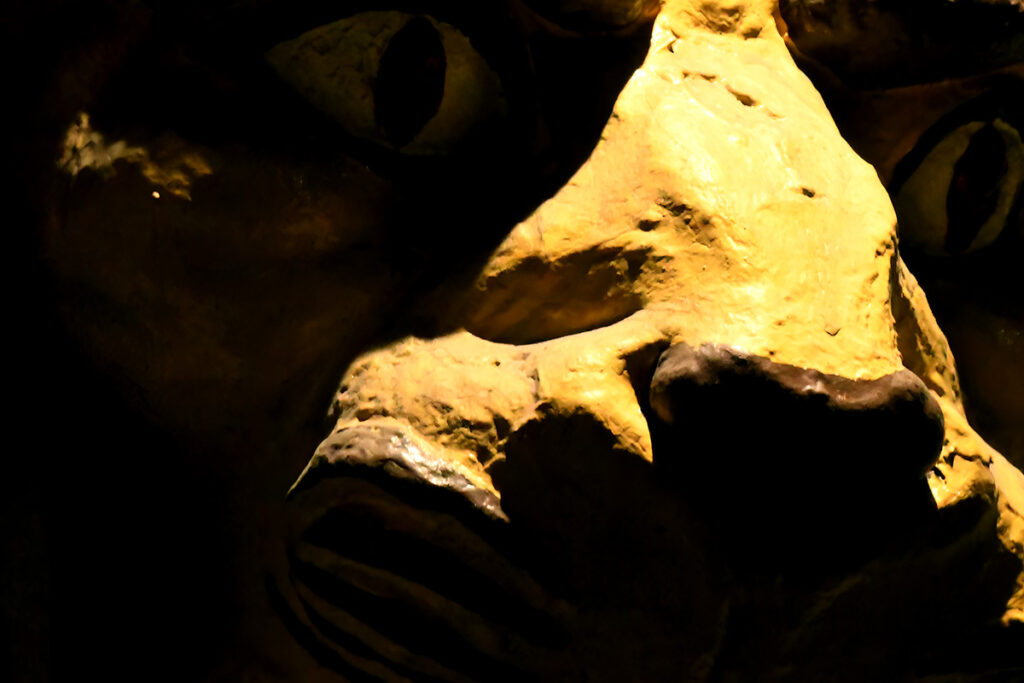
Faces
Faces is one of Ladytron lead singles. It was released in 2022. The song features Helen Marnie's haunting vocals over a pulsating electronic beat.
A press release describes the song like so: “Over an echoing disco soundscape, Faces with title taken from the Cassavetes film of the same name, evokes bittersweet longing and euphoric escape, with expansive synth heavy production recalling 1970s euro diva Amanda Lear.”
The music video for "Faces" was directed by band member Daniel Hunt. Inspires by Chris Marker’s short film La Jetee and the Italian Giallo genre.
Fight from Angkor
The song Fight from Angkor is unique and showcases the band's musical talent. The lyrics and the handling of time are interesting. However, I think the song could benefit from a stronger chorus or hook to keep the listener engaged. Additionally, some of the instrumentals felt a bit repetitive. Overall, it's a decent track, but not one of my favorites from Ladytron. Despite this, I must admit that the song does have some redeeming qualities. In particular, it reminds me of the band Strawberry Switchblade, which I am quite fond of.
As a visual artist and former DJ, I'm always looking for ways to explore my creativity. One of my favorite projects from my DJ days was making video mashup that combined music and visuals that I would include during my set. This Dolly Parton Video was always a crowd favorite and floor filler every time.
I drew inspiration for the video from different sources.
Dolly's Oscar performance of 9 to 5
Clips of Madonna
John Travolta's fancy cowboy footwork
Over 60,000 plays on YouTube (only the occasional bad review)
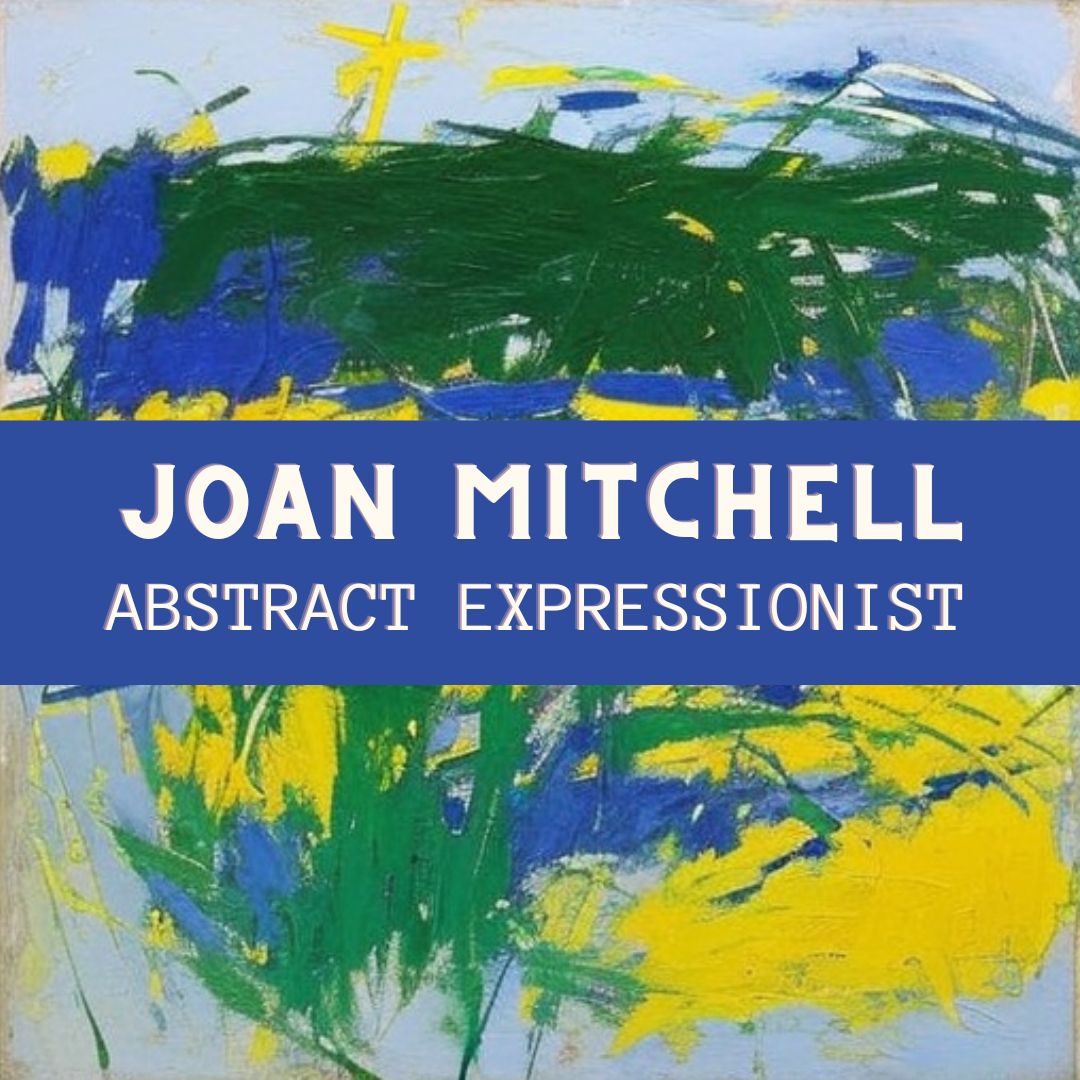
Joan Mitchell was an American abstract expressionist and feminist painter who is well known for her color abstract paintings. Mitchell was a major figure in the New York School of Abstract Expressionism and is considered one of the greatest painters of the 20th century. Mitchell is best known for her vibrant and energetic paintings that often depicted nature and the environment. Her work has been influential in shaping modern art, particularly in the fields of abstract expressionism and color field painting. This article will explore her life, her work, and how she shaped modern art.
Joan Mitchell’s Early Years and Education in Art
Mitchell's early years were spent in Chicago, where she attended the School of the Art Institute of Chicago. Here, she was exposed to various art movements such as cubism, surrealism, and abstraction expressionism. She was particularly influenced by Hans Hofmann's teaching which encouraged her to explore new techniques in painting. Her work during this period focused on capturing movement and expressing emotion through bold brushstrokes and vivid colors.
Joan Mitchell’s Legacy in the Field of Abstract Expressionism
Joan Mitchell has a lasting legacy in the field of abstract expressionism. During her lifetime, Mitchell was a major figure in the Abstract Expressionist Movement and was known for her bold and vibrant brushstrokes. She also developed a unique style of landscape painting, which she practiced in her East Hampton studio until her death in 1992. Her work has inspired many modern artists to explore their own creative boundaries and push the boundaries of abstract expressionism. Joan Mitchell's legacy continues to live on through the many works she created during her life, as well as through those who continue to be inspired by her art today.
The Unifying Themes in Joan Mitchell’s Paintings
Mitchell’s works are characterized by their improvisational and automatic drawing techniques, as well as her vivid use of color. Through her works, Mitchell explores the unifying themes of nature, relationships, and identity.
The Impact on Other Contemporary Painters and Artists in the 20th Century
The 20th century saw a revolution in the art world. There were a number of contemporary painters and artists who had an immense impact on the art of the time. Lee Krasner, Willem de Kooning, and Mark Rothko were some of the most influential artists of their generation. They all had different styles and techniques but their work was highly influential to other painters and artists. Their influence can be seen in works from different genres including abstract expressionism, pop art, minimalism, and more. Their unique styles have been adopted by many other contemporary painters and artists in the 20th century, making them some of the most influential figures in modern art history.
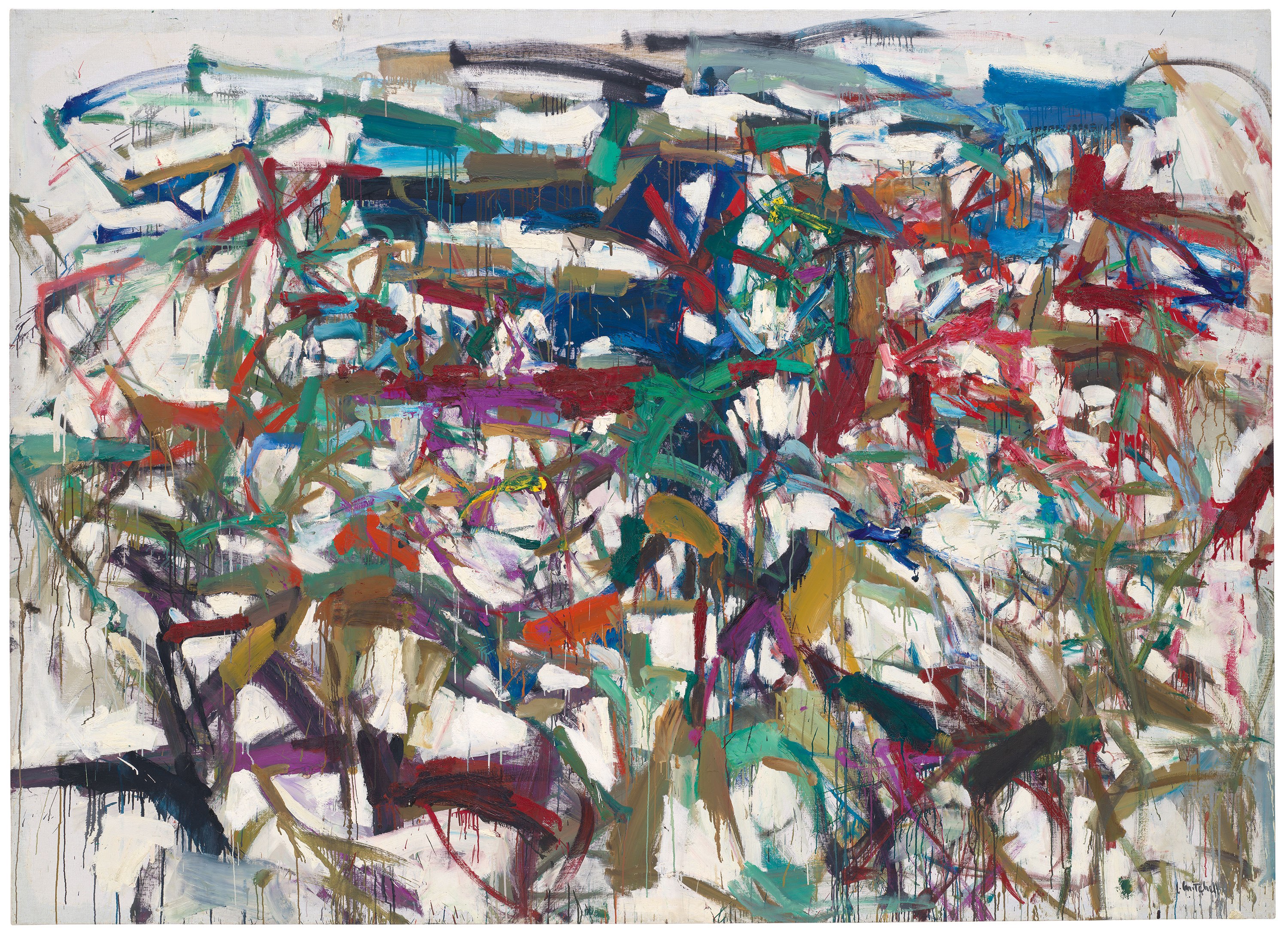
Chatiere (1960)
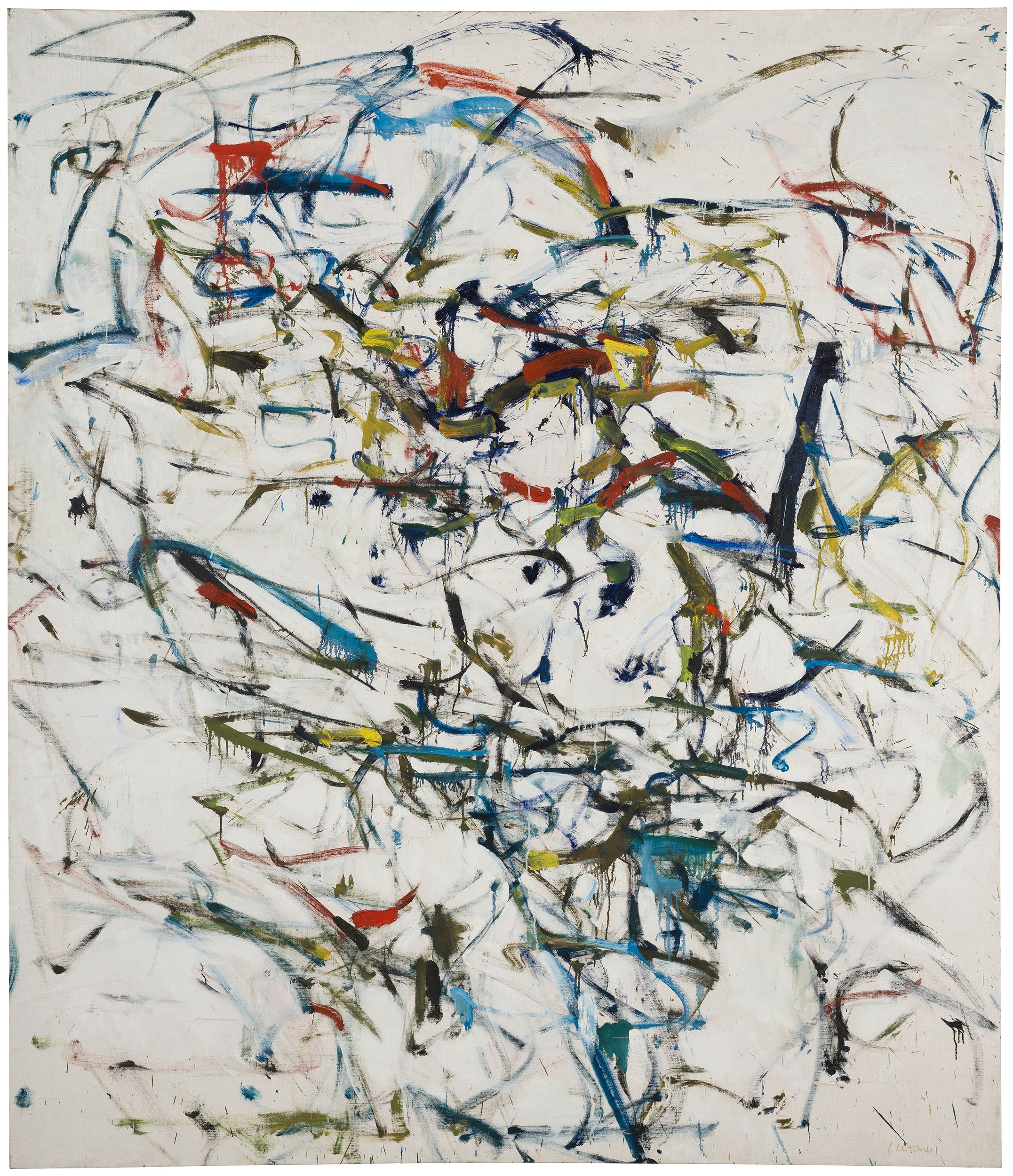
Chatiere (1960) - is a masterful work of art. Created in her signature abstract expressionist style, the painting captures the vibrant energy of nature. The composition of the painting evokes a sense of movement and energy that draws in viewers from all walks of life. It stands as an example of Mitchell's ability to capture beauty in her artwork and demonstrates her commitment to experimentation with color and form.
King of Spades (1956)
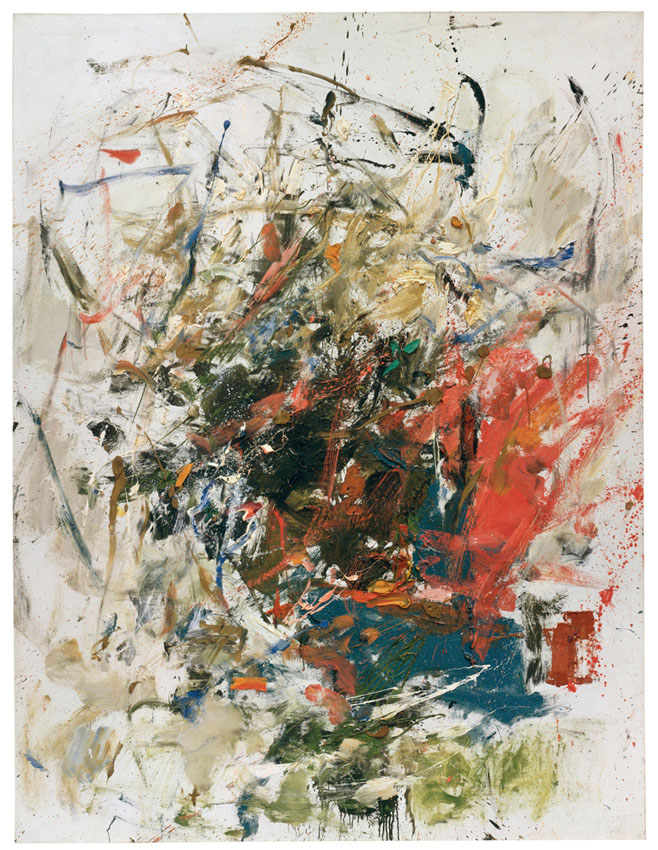
King of Spades (1956) - The painting is composed of bold and contrasting colors on a large canvas which captures Mitchell's emotional state at the time of its creation.
Evenings on Seventy-third Street (1956)
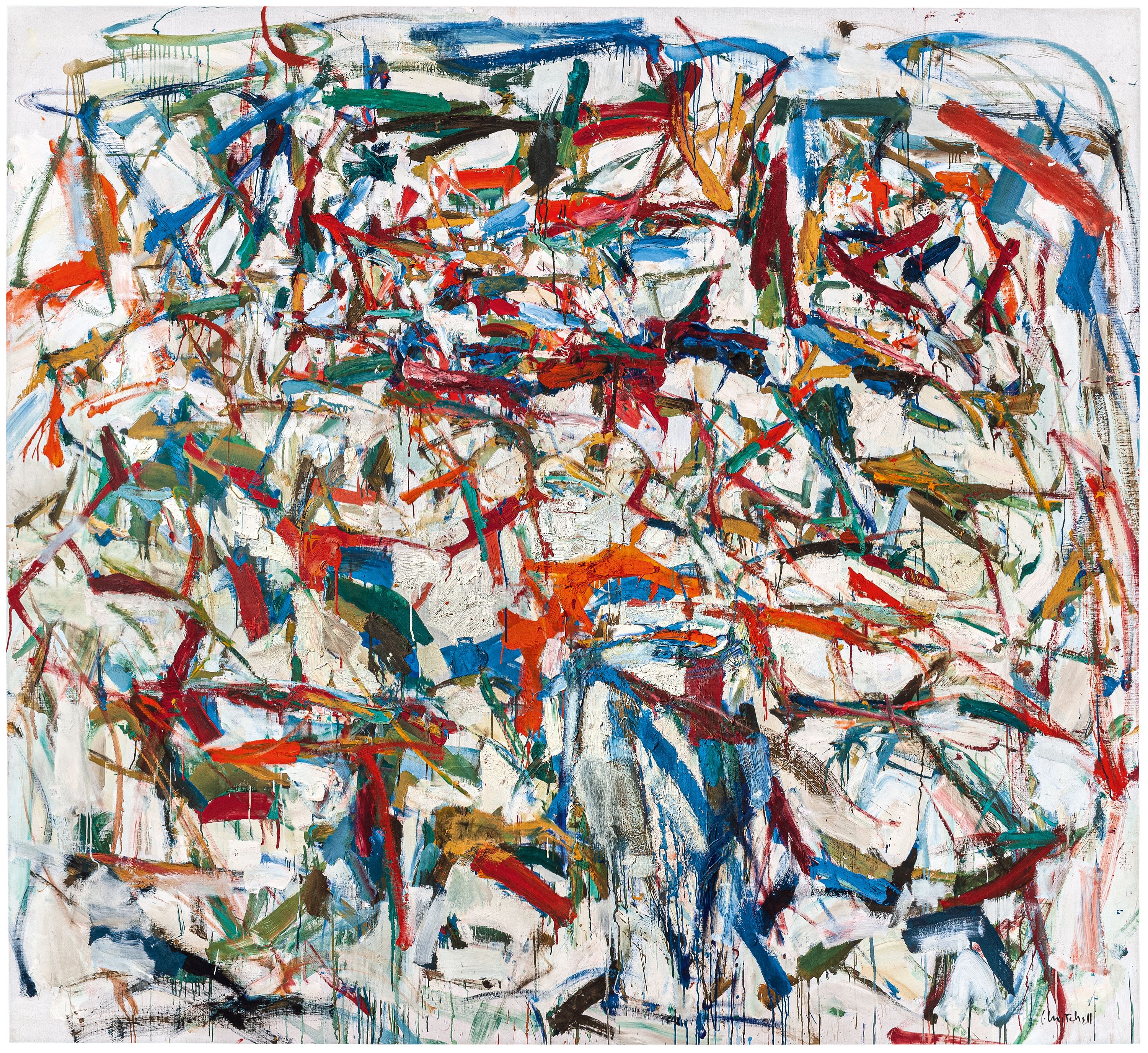
Evenings on Seventy-third Street (1956) - The composition of the painting is balanced and well-structured, creating an overall feeling of harmony.
Ladybug (1957)
Ladybug (1957) - Joan Mitchell's Ladybug (1957) is a vibrant and captivating painting, full of color and movement. Mitchell has used a variety of techniques to create the effect of a living creature on the canvas. She has used bold brushstrokes, dynamic lines, and bright colors to create an impressionistic representation.
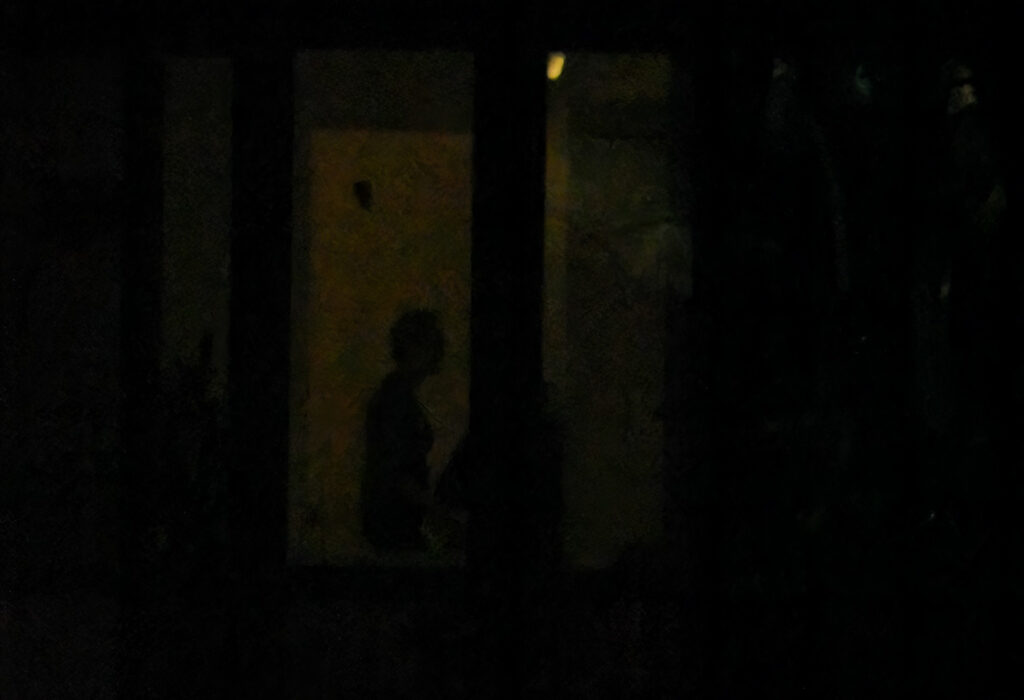
Photographing New York City is a unique art form that allows the photographer to peek into the lives of others without actually entering their space.
What is that space between in and out?
The space between private space and public space has become increasingly blurred. In New York City the boundaries between private and public space is always been questioned, while creating the space where both are possible.
By using Motion blur photography I am able to capture this unique in-between space - a few inches outside the window and a few inches within.
Light, Color, Movement
Light Color Movement
The rise of Impressionism in the late 19th century marked a new era in art history. This artistic movement was heavily influenced by the newly established medium of photography. Impressionists focused on light, color, and movement, rather than precise details, similar to motion blur in photography. Early photography was a time-consuming process that often resulted in images with distortions and motion blur that the photographer would reject. However, the impressionists movement embraced these imperfections and used them to create art.
A new study published by climate scientists in the journal Proceedings of the National Academy of Sciences - suggests that many English artists during the span of the Industrial Revolution a time of unprecedented growth in air pollution.
Managing complex WordPress websites can be a huge hassle.
Take the stress out of website management with easy-to-use techniques & plugins to help you handle complex websites like a pro, saving you time and money.
Get peace of mind knowing that your website is in top shape & running smoothly, no matter how complicated it may be!