Responsive Menu
Add more content here...
BOOK REVIEW Lost in Shagri-la

BOOK REVIEW Lost in Shagri-la

“Fear is something I don’t think you experience unless you have a choice. If you have a choice, then you’re liable to be afraid. But without a choice, what is there to be afraid of? You just go along doing what has to  be done.”

Margent

Lost in Shangri-La received a largely positive response from readers and critics alike. This book tells the overlooked story of a plane crash on the Dutch island of New Guinea in the final months of World War II. The book was praised for its gripping storytelling, meticulous research, and the way it shed light on a lesser-known World War II incident. The vivid descriptions of the crash, the survivors' struggles, and the subsequent rescue mission captivated some readers. A non-fiction book based on extensive research and interviews conducted by the author, Mitchell Zuckoff. The book provides a detailed account of the crash and subsequent events, drawing from multiple sources, including survivors, military records, and historical archives.

On the surface Lost in Shangri-la explores themes of survival, resilience, and the indomitable human spirit. Despite the dire circumstances they found themselves in, the survivors refused to give up hope. They worked together, drawing on their individual strengths and skills, to overcome the challenges they faced. A real story of their determination and resilience served as a powerful reminder of the strength of the human spirit in the face of adversity. Lost in Shangri-La does highlight the power of storytelling and media and the impact it can have on our lives, and the lives of generations.

This survival story of the crash and subsequent rescue captured the imagination of people around the world. It became a symbol of hope and resilience during a time of war. And was held on the front page of most all News Papers across the United States and beyond. The story at the time had all the elements of a hollywood movie, especially with the arrival of a director cameraman.

Book Outline

  • The Crash - In 1945, a plane carrying 24 soldiers and WACs (Women's Army Corps) crashed in a remote valley in New Guinea. Three survivors, Margaret Hastings, John McCollom, and Kenneth Decker, find themselves stranded in an heavily populated and unknown land to them.
  • The Search - As news of the crash reaches the outside world, a rescue mission is organized. Lieutenant Colonel William "Bill" Quinn leads a team of paratroopers to find and rescue the survivors. They face numerous challenges, including treacherous terrain and natives.
  • The Valley - Quinn and his team finally reach the valley where the survivors are believed to be. They encounter the Dani tribe, who have never seen outsiders before. The soldiers establish a base camp and begin their search for the survivors.
  • The Survivors - Quinn's team discovers the three survivors, who have been living with the Dani tribe. Margaret, John, and Kenneth are in surprisingly good health, considering the circumstances. The soldiers must now figure out a way to bring them back to civilization.
  • The Rescue - Quinn and his team face numerous challenges as they prepare for the rescue mission. They must build an airstrip in the valley to facilitate the evacuation.
  • The Airlift - With the airstrip completed, the rescue plane arrives to evacuate the survivors. However, bad weather and mechanical issues delay the operation. The soldiers and survivors must endure several more days in the valley before they can finally leave.
  • The Return - The survivors are airlifted out of the valley and brought back to civilization. They face media attention and medical examinations upon their return.
  • The Aftermath - The survivors face various challenges in the aftermath of their rescue.
  • The Legacy - Decades later, the survivors and their families reflect on their experiences in the valley. The story of the crash and rescue mission continues to inspire and captivate people around the world.

Before the Crash

The book acknowledges the complexities of the time period and the motivations of the military and government. It explores the desire to boost morale and maintain a positive image during wartime. During World War II, the American army had a significant presence on New Guinea for several reasons. New Guinea, located in the Pacific region, held strategic importance for both the Allies and the Axis powers.

New Guinea offered a strategic location for military operations in the Pacific. It provided a stepping stone for the Allies to launch offensives against Japanese-held territories in the region. By establishing airfields and bases on New Guinea, the Allies were able to gain closer proximity to Japanese positions and create a staging area for future campaigns.

Control over New Guinea allowed the Allies to safeguard important lines of communication. The region served as a crucial link between the United States and Australia, facilitating the transportation of troops, equipment, and supplies. New Guinea's strategic location allowed for the establishment of supply lines and logistical support, which were vital for sustaining military operations in the Pacific.

New Guinea was rich in natural resources, including minerals, timber, and agricultural products. These resources were valuable for both military and civilian purposes. The Allies sought to secure these resources and prevent their exploitation by the Axis powers, particularly Japan, which had ambitions of expanding its empire in the region.

New Guinea also provided an opportunity for the Allies to engage in psychological warfare against the Japanese. By conducting successful military operations on New Guinea, the Allies were able to demonstrate their ability to counter Japanese aggression and bolster the morale of their own troops. The presence of the American army on New Guinea during World War II was driven by strategic considerations, the need to secure vital lines of communication, the desire to control important resources, and the opportunity to weaken the Japanese war effort in the Pacific.

The dedicated team on board the Gremlin Special were all part of the Fee-Ask maintenance division, diligently working to ensure smooth operations and maintenance of aircraft in the Far East.

The fact that the crash of the Gremlin Special occurred during what was a joyride is indeed a significant aspect of the story in "Lost in Shangri-La." It sheds light on the circumstances that led to the fateful event and adds complexity to the narrative. The book explores the motivations behind the sightseeing tour and the individuals' desire to experience the beauty of the New Guinea jungle. It acknowledges that joy rides were not uncommon during World War II, as a means for servicemen and women to temporarily escape the harsh realities of war and boost morale. Ultimately, the crash and the subsequent survival story that unfolds in Lost in Shangri-La serve as a testament to the strength, resilience, and resourcefulness of the survivors, regardless of the circumstances that led to the tragedy. The book focuses on their incredible journey and the heroic efforts made to rescue them, rather than dwelling on the circumstances that brought them to that point.

Treatment of the Natives

Another important theme explored in the book is the "clash" between different cultures. The book provides some insight into the mistreatment of the native people but does not delve deeply into the specifics. The book does acknowledge some instances of mistreatment, such as the stress caused to the native tribes by the low-flying aircraft. These incidents highlight the tensions that existed between the army personnel and the native people, and add depth to the historical context of the story.

Their spears and arrows
“His gut told  him that the natives were no threat—he made a casual reference in  his journal to their spears and arrows, and wrote that their “only  means of cutting are stone axes.”

As the rescue mission got underway, the survivors encountered the Dani tribe, a remote indigenous group living in the jungle. The clash between the modern world and the ancient traditions of the Dani people creates a fascinating dynamic. Zuckoff delves into the cultural differences and explores how both sides navigated this unfamiliar territory, ultimately finding common ground and forming a bond.

“Fired a few shots to see effect on natives and most of them  didn’t stop running till they were out of sight, he wrote. His men  followed suit, including one who fired a burst from a Thompson  submachine gun, the famous Tommy Gun. As the natives fled”

It is clear that firing shots at a group of innocent and unpoked natives is not an appropriate or responsible action. In general, soldiers should be trained to use force only as a last resort and to prioritize protecting innocent civilians. If the soldiers had reason to believe that the natives posed a threat, they could have attempted to resolve the situation through nonviolent means or used minimal force to subdue any potential threats.

“The men were doing it just for the hell of it, to  make the natives run and yell and whatnot,” he said.  The guns’ noise frightened the natives, but Walter wrote in his  journal that “they do not understand the killing power of the modern  firearm.”

It is also important for soldiers to be aware of the cultural context and potential consequences of their actions, especially when operating in foreign countries. This group of soldiers were showing off their firearms and fired shots at a group of unarmed and non-threatening natives. One of the men fired a burst from a Thompson submachine gun. The natives fled and kept running until they were out of sight. The context and implications of this statement are concerning, as the group of men acted irresponsibly and put the lives of innocent people in danger.

“Equally memorable to the tribespeople was the soldiers’ practice of digging a single hole covered by a tent where all of them went to  defecate. Native practice called for bodily waste to pass in private”

What the Natives Thought

The natives believed that parachutes were spirits descending to the ground on ropes.

Good-looking enough for the men
“Don’t kill them. They are not human. If not for the maga, the six  sleeping soldiers might have been ambushed and slaughtered by hundreds of spear-carrying warriors whom a regional big man could  have summoned on short notice."

Their stories can inspire us and make us contemplate the courage and determination they displayed during their ordeal. However, it is also important to acknowledge those who didn't survive, as it reminds us of the tragic toll of such events and the potential futures that were lost.

Speculating about the paths that the non-survivors might have taken can be a poignant exercise. It allows us to reflect on the impact of their absence and the potential contributions they could have made. It also serves as a reminder to appreciate the value of life and the fragility of our existence.

While we may never know the exact stories of those who didn't make it, their absence is a stark reminder of the risks and sacrifices involved in such extraordinary circumstances. It adds depth and emotional weight to the narrative, prompting us to reflect on the unpredictability of life and the profound impact of tragic events.

“"As she stared at the natives and the natives stared back, Margaret felt relief. Soon it spread into affection." Chapter 12, pg. 121

During her wait for rescue in late June, Margaret found solace by exploring a nearby native village close to the camp. It was there that she formed a bond with a native woman whom she affectionately named Queen. Their blossoming friendship led them to spend valuable time together, creating cherished memories along the way. Margaret's friendship with Queen was particularly significant. Queen's protective nature and genuine care for Margaret not only fostered a sense of safety and belonging but also challenged Margaret's assumptions about the native people. Through their shared experiences and lack of conversations, Margaret gained a deeper appreciation for their customs, traditions, and values.

The experience of meeting and befriending this woman had a profound impact on Margaret, challenging her preconceived notions and prejudices. The woman appeared to assume a protective stance towards Margaret, demonstrating her care and concern for her wellbeing.

Many individuals found common ground with the locals, forming friendly relationships and engaging in regular trade activities.

Other Interesting Quotes from the Book

“The first plane into the valley was the supply plane.  “Does the queen think she wants to pull out of there today?” Major  Gardner asked via walkie-talkie.  “She’s been wanting to get out of here for a week,” Walter replied."
“Well, they didn’t ever mingle,” he  said later. “And I told the men, absolutely not. I don’t think any of  them were good-looking enough for the men, anyway."
““If anybody lays a hand on her, so  help me God, you’re busted to private the next minute.”  Walter explained: “I had to remind my men a couple of times that  I sure as hell didn’t want a pregnant WAC flying out of there. . . . That  would have given me a

“I wanted him to tell Maggie to leave the men alone,” Walter said.  “I had one noncom that was the best-looking guy in the unit, Don  Ruiz. He was one of my best noncoms, and also one of the handsomest men around. Maggie sort of had her eyes on him and

He  knew there was no birth control in the valley, and he didn’t want unexpected consequences.

When Walter didn’t rise to the bait, he said, Margaret turned her attentions to one of his men, Sergeant Don Ruiz."
Summary of the book Scene & Structure

Summary of the book Scene & Structure

"Scene and Structure" by Jack M. Bickham is a comprehensive guide for writers, focusing on the crucial elements of crafting effective scenes and structuring a compelling story. Bickham provides valuable insights and practical advice, emphasizing the importance of engaging readers through well-constructed scenes and a solid story structure.

What is a scene?

The book begins by defining what a scene is and its significance in storytelling. Bickham explains that a scene is a unit of conflict that moves the story forward, and it should contain a clear goal, conflict, and resolution. He emphasizes the need for scenes to be dynamic, engaging, and purposeful, urging writers to ensure that each scene contributes to the overall plot and character development.

What is a sequel?

One of the key takeaways from "Scene and Structure" is the concept of "scene and sequel." Bickham introduces the idea that scenes are followed by sequels, which allow characters to react and reflect on the events that occurred. He emphasizes the importance of balancing action and emotion, suggesting that sequels should provide a breather for readers while still maintaining tension and moving the story forward.

Follow the conflict with the character's

  • Emotional reaction.
  • Reflection on the events.
  • A decision that moves the story forward.

What is a story structure?

Another significant theme in the book is the importance of story structure. Bickham explores various structural frameworks, such as the three-act structure and the four-part structure, and explains how they can help writers organize their stories effectively.

Three-Act Structure

The three-act structure is a framework commonly used in storytelling, which divides a narrative into three parts: the setup, confrontation, and resolution. In the setup, the characters and their situations are introduced, and the conflict is established. In the confrontation, the conflict intensifies, and the characters face obstacles and challenges. In the resolution, the conflict is resolved, and the story is concluded.

Four-Act Structure

The four-part structure, also known as the "hero's journey," is another framework used in storytelling. It divides the story into four parts: the setup, the response, the attack, and the resolution. In the setup, the character is introduced, and their normal world is established. In the response, the character is called to action and begins their journey. In the attack, the character faces obstacles and challenges, leading to a crisis point. In the resolution, the character overcomes the crisis and returns to their normal world, having undergone a transformation.

Both structures share similarities in that they provide a framework for organizing a story and maintaining a solid narrative arc. They both involve introducing characters, establishing a conflict, and resolving that conflict. However, the four-part structure places a greater emphasis on the character's journey and transformation, while the three-act structure focuses more on the escalating conflict leading to the resolution.

Character Development and Motivation

Bickham highlights the significance of character development and motivation. He emphasizes that characters should have clear goals, desires, and conflicts, which drive the story forward.

Writing Techniques

Techniques that Bickham provides for developing well-rounded characters.

  1. Creating clear goals, desires, and conflicts for each character.
  2. Ensuring that a character's actions and decisions align with their motivations.
  3. Showing the character's strengths and weaknesses.
  4. Giving each character a unique voice and personality.
  5. Providing backstory and context to explain a character's behavior.
  6. Showing how characters change and grow over the course of the story.

By implementing these techniques, writers may craft characters that are both believable and relatable, capturing the interest of readers and propelling the story forward. Bickham provides guidance on developing characters with clear goals, desires, and conflicts, and ensuring that their decisions and actions align with their motivations, resulting in fully realized and engaging protagonists.

Revision and Editing

Bickham encourages writers to critically analyze their scenes and story structure, ensuring that each element serves a purpose and contributes to the overall narrative.

Bickham provides practical tips for identifying weak scenes, resolving plot holes, and enhancing the overall flow and coherence of the story. Specifically, he recommends writers to:

  • Cut scenes that do not serve a clear purpose or advance the plot.
  • Ensure that each scene contains a clear goal, conflict, and resolution.
  • Use dialogue and action to add tension and interest to scenes.
  • Avoid excessive backstory and exposition, which can slow the story down
  • Ensure that each character's actions and decisions are motivated and consistent.
  • Use sequels to provide a breather for readers while still maintaining tension and moving the story forward.
  • Analyze the story structure to ensure that it is effective and coherent
  • Revise and edit the story thoroughly to ensure that it is polished and engaging.
cherry_picking_the_most_important_ideas
Cherry Pick the Most Important Ideas

I personally found this book to be a very helpful resource for improving my storytelling skills. However, I must admit that the book is jam-packed with so many useful tips and tricks that it is overwhelming to try to implement them all at once. It's like trying to eat an entire buffet in one sitting - you're better off picking one or two things to focus on and coming back for more later.

That said, Bickham's insights into scene construction, story structure, character development, and revision/editing are all incredibly valuable and have helped me to become a better writer. If you're looking to improve your craft, I highly recommend giving "Scene and Structure" a read. Just remember to cherry-pick the tips that resonate with you and take your time to implement them effectively.

The Intersection of Technology and Social Justice

The Intersection of Technology and Social Justice

Technology and Social Justice: Exploring the Intersection

Community Design System

An Analysis of "Race After Technology", "Design Justice", and "Automating Inequality"

In today's world, technology plays a significant role in shaping our lives and society. It has the power to connect people, provide access to information, and improve efficiency in various aspects of our daily routines. However, it is crucial to recognize that technology is not neutral. It can both reflect and perpetuate existing inequalities and injustices. In this blog post, we will explore the intersection of technology and social justice through three thought-provoking books: "Race After Technology," "Design Justice," and "Automating Inequality."

"Race After Technology" by Ruha Benjamin delves into the ways in which technology can reinforce racial inequality. Benjamin challenges the notion that technology is inherently unbiased, highlighting how algorithms and data-driven systems can perpetuate discrimination and bias. She offers insights into the new forms of racial injustice that emerge through technology and presents abolitionist tools to address and dismantle these systems.

"Design Justice" by Sasha Costanza-Chock advocates for a more inclusive and equitable design process. The book emphasizes the importance of centering marginalized voices in the creation and implementation of technology. By doing so, Costanza-Chock argues, designers can challenge power imbalances and create solutions that truly address the needs of all communities. The book provides practical frameworks and case studies to guide designers in incorporating principles of justice and equity into their work.

"Automating Inequality" by Virginia Eubanks explores how technology is used to automate and perpetuate systems of inequality. Eubanks exposes the ways in which high-tech tools are employed to profile and punish marginalized communities, particularly those experiencing poverty. Through vivid examples and personal stories, she sheds light on the hidden biases and harms that can arise from relying on automated decision-making processes. Eubanks calls for a reevaluation of these technologies and urges for their transformation to better serve and uplift vulnerable populations.

Collectively, these books offer critical insights into the intersection of technology and social justice. They highlight the urgent need to critically examine and challenge the biases and injustices ingrained within our technological systems. Moreover, they provide practical tools, frameworks, and case studies to guide individuals, communities, and organizations in working towards a more just and equitable future.

To create a more equitable society, it is essential for designers, policymakers, and technologists to be aware of the societal implications of their work. We must move beyond a purely technological perspective and actively consider the potential impact on marginalized communities. By centering the voices and experiences of those who are often marginalized, we can create technology that is truly responsive to the needs of all.

Technology and social justice are intertwined in complex ways. The books "Race After Technology," "Design Justice," and "Automating Inequality" shed light on the challenges and opportunities presented by technology in the pursuit of a more equitable future. They call upon us to critically examine our assumptions, question the status quo, and actively work towards dismantling systems of inequality. By doing so, we can harness the power of technology to create a more just and inclusive society for all.

Combating Disinformation: Strategies and Solutions

Combating Disinformation: Strategies and Solutions

Disinformation is a growing problem in today's society, with false information and misleading claims. The impact of disinformation can be far-reaching, with the potential to exacerbate existing inequalities, undermine democratic processes, and harm individuals and communities.

To combat disinformation effectively, it is important to understand its causes and effects, as well as the strategies and solutions that can be used to mitigate its impact. In this article, I will explore the topic of disinformation and provide practical guidance for individuals and organizations looking to combat this problem.

What is Disinformation?

Disinformation is the deliberate spread of false or misleading information with the intent of deceiving others. It has been used for many different purposes throughout history, including political propaganda, corporate advertising, and social media manipulation.

The Impact of Disinformation

The impact of disinformation can be extensive and long-lasting, with the potential to heighten existing inequalities, undermine democratic processes, and harm individuals and communities. Disinformation can be particularly harmful in marginalized communities, which have historically been targeted by disinformation campaigns and may already face significant challenges related to health, education, media, and political representation.

When Disinformation Masquerades as Truth from Trusted Sources

It can be difficult to verify the accuracy of information, particularly when the source of the disinformation is often via the news itself. Despite what many people believe, disinformation is not just something created by other countries or bad actors. In fact, much of the disinformation that circulates in the United States comes from trusted sources such as news outlets and social media platforms, schools, pharmaceutical companies, and even government officials.

False information undermines trust and confidence in crucial establishments, especially when the misinformation originates from within those very institutions and leaders. This phenomenon further amplify the existing problems we encounter.

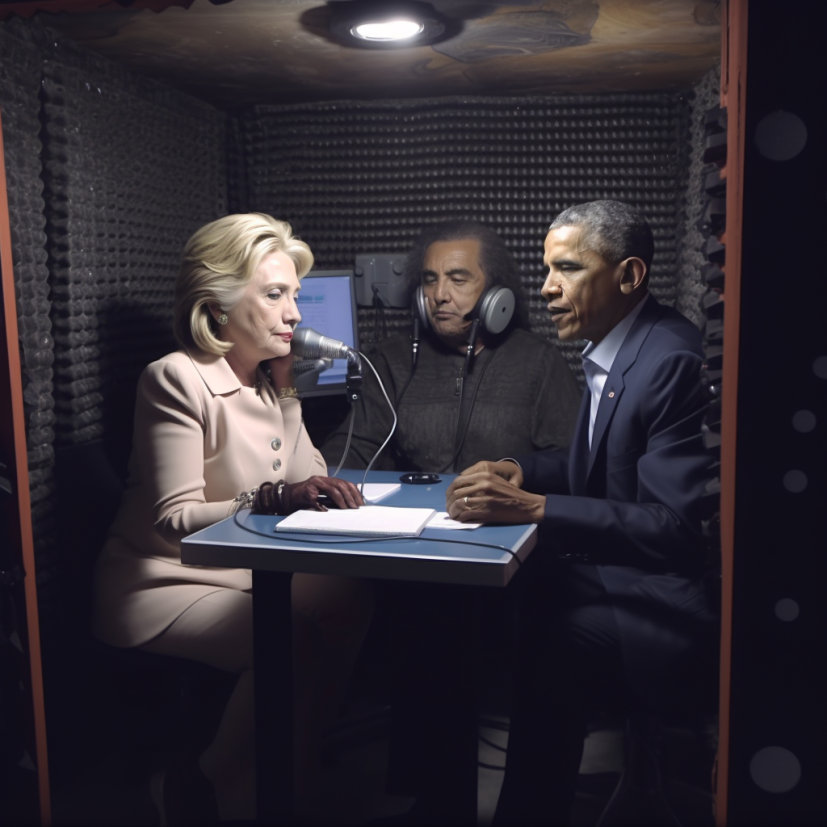
The Call is Coming from Inside the House.

When a stranger calls

News Outlets and Social Media Platforms

News outlets have been subject to lawsuits and fines for airing biased and misleading news segments, spreading false information, and enabling discriminatory advertising practices.

In 2018, the media company Sinclair Broadcast Group was fined $13.4 million by the Federal Communications Commission for airing news segments that were considered to be biased and misleading.

In 2021, the voting technology company Smartmatic filed a $2.7 billion lawsuit against Fox News, alleging that the network spread false information about the company's involvement in the 2020 U.S. presidential election.

In 2021, Dominion Voting Systems filed a $1.3 billion lawsuit against Fox News, alleging that the network spread false information about the company's involvement in the 2020 U.S. presidential election.

In 2020, Twitter and Facebook were sued by the families of victims of the 2016 Pulse nightclub shooting in Orlando, Florida. The families claimed that the social media platforms had provided material support to the shooter by allowing him to post extremist content and connect with other extremists on the platforms.

In 2018, Facebook was sued by civil rights groups for allowing advertisers to discriminate on the basis of race and ethnicity in violation of the Fair Housing Act. The case was settled in 2019, with Facebook agreeing to make changes to its ad targeting system.

Institutions

There have been many cases where schools have been taken to court for misrepresenting themselves or providing false information.

In 2018, Harvard University was sued by a group called Students for Fair Admissions, which claimed that the school discriminates against Asian-American applicants. The case is ongoing.

In 2016, the Supreme Court upheld the University of Texas at Austin's use of affirmative action in admissions. The case was brought by a white student, Abigail Fisher, who claimed that the school discriminated against her because of her race.

In 2016, the ITT Technical Institute, a for-profit college chain, was sued by the Consumer Financial Protection Bureau (CFPB) for predatory lending practices. The CFPB alleged that the school misled students about the cost of its programs and the job prospects for its graduates.

In 2016, the for-profit education company, Trump University, settled three lawsuits for $25 million. The lawsuits claimed that the school made false claims about its curriculum and the qualifications of its instructors.

In 2016, DeVry University, a for-profit college chain, settled a lawsuit for $100 million. The lawsuit claimed that the school made false claims about the job prospects for its graduates.

In 2020, a group of students and advocacy organizations sued the University of California system, claiming that the school's use of standardized tests in admissions discriminates against low-income and underrepresented minority students.

Health & Pharmaceutical Companies

These companies were charged with disinformation, misleading investors, medical professionals, and the public about the safety and effectiveness of their products. a small sample of the many cases of corporate misconduct that have occurred within the health and pharmaceutical industries.

In 2023, Johnson & Johnson was sued for selling talc-based baby powder that was found to contain asbestos, a known carcinogen. The company was found to have known about the presence of asbestos in its products for decades but failed to inform consumers.

In 2020, Purdue Pharma was found to have misled doctors and patients about the addictive properties of its painkiller, OxyContin. The company was fined $600 million for its role in the opioid epidemic that has devastated communities across the United States.

In 2018, Theranos, a healthcare technology company, was charged with fraud for misleading investors and medical professionals about the effectiveness of its blood testing technology. The company claimed that it could perform a range of medical tests using just a few drops of blood, but it was later revealed that the technology did not work as advertised.

Government Officials

It is unfortunate that government officials have often resorted to spreading disinformation in order to deceive the public and further their own agendas. This manipulative tactic is not a recent phenomenon and has been employed in different political contexts, leading to wide-ranging and consequential effects.

In 2016, former Congressman Steve Stockman was indicted by a grand jury on charges of fraud and conspiracy to commit fraud after allegedly using charitable donations for personal and campaign expenses. Stockman was found guilty in 2018 and sentenced to 10 years in prison.

In 2017, Michael Flynn, pleaded guilty to lying to the FBI about his contacts with the Russian government during the 2016 presidential campaign. Flynn was accused of providing false information to federal investigators about his communications with Russian officials and of failing to register as a foreign agent.

In 2018, Paul Manafort, was convicted of multiple charges related to financial fraud and lying to federal investigators. Manafort was found to have used false information to obtain loans and evade taxes, among other things.

Companies

Disinformation has been used by businesses to deceive the public, often resulting in significant consequences and profits. This practice is not a new one, and throughout history, many companies have been accused of misleading the public in order to achieve their goals. It is a tactic that has been used in various industries. The use of disinformation has had a lasting impact on society, and it is important to be aware of its effects.

In 1998, tobacco companies were sued by the U.S. government for misleading the public about the health risks associated with smoking. The companies were found guilty of conspiracy and fraud and were required to pay a settlement of $206 billion.

In 2015, Volkswagen was found to have installed software in its diesel cars that allowed them to cheat emissions tests. The company was fined $4.3 billion and agreed to spend $14.7 billion to settle claims related to the scandal.

Fossil fuel companies have been accused of promoting disinformation about climate change.

Strategies for Combatting Disinformation

Education and Awareness

One of the most effective ways to combat the impact of disinformation is through education and awareness initiatives. This can involve providing people with accurate information about the topic in question and helping them to develop critical thinking skills that will enable them to evaluate information more effectively.

Media literacy programs can be an effective way to educate people about how to spot and avoid disinformation. Supporting these initiatives through donations or advocacy can help to expand their reach and impact.

Fact-Checking and Verification

Fact-checking and verification can also be effective in mitigating the impact of disinformation. By providing people with accurate information and verifying the accuracy of claims, we can help to counter the spread of false information and limit its impact.

Fact-checking can be a time-consuming process. It is important to note that many fact-checking platforms may have biases when evaluating information. For example, some fact-checking organizations have been criticized for being too closely aligned with the pharmaceutical industry, which can create conflicts of interest when evaluating information related to pharmaceuticals. It is vital to approach all sources of information with a critical eye and to seek out multiple sources when evaluating claims, as relying on just a few fact-checking platforms with similar biases may not provide a diverse range of information. It's paramount to consider sources from different perspectives and backgrounds to ensure a comprehensive understanding of the issue at hand.

By developing strong critical thinking skills and staying informed about the issues, individuals can help to combat disinformation and promote accuracy and honesty in public discourse.

Cognitive Reframing

Cognitive reframing is a powerful technique that involves changing the way that a person thinks about a particular topic or issue. This can involve providing accurate information, challenging false beliefs and assumptions, and highlighting the potential consequences of disinformation. By helping people to reframe their beliefs and attitudes, we can reduce the impact of disinformation and promote more accurate and informed decision-making.

When I volunteered for the Ulster Project in Atlanta, I witnessed firsthand the power of cognitive reframing in action. The Ulster Project is a program that brings together Protestant and Catholic teenagers from Northern Ireland to live with host families in the United States for a month during the summer. The goal of the program is to promote understanding and reconciliation between the two communities, which have historically been deeply divided.

Through a series of structured activities and discussions, the teenagers are encouraged to challenge their assumptions and beliefs about each other and about their own communities. They are exposed to new perspectives and experiences, which often lead to cognitive reframing and a more nuanced understanding of the complex issues at play. A significant portion of the impactful work occurred during moments when the counselors were not actively involved. In these instances, Protestant and Catholic teens found themselves defending their beliefs in front of their American peers, which often led to eye-opening conversations where they confronted and dismantled unfounded stereotypes they had been harboring.

Solutions for Combating Disinformation

Supporting Media Literacy Initiatives

Media literacy programs can be an effective way to educate people about how to spot and avoid disinformation. Supporting these initiatives through donations or advocacy can help to expand their reach and impact.

Promoting Transparency and Accountability

By promoting transparency and accountability in media, health, education, institutions, industry, and government we can help to limit the spread of disinformation and promote more accurate and informed decision-making.

Transparency and accountability can involve a range of strategies, including open data policies, whistleblower protections, and independent oversight bodies. By promoting transparency and accountability, we can help to build trust in important institutions and leaders and reduce the impact of disinformation.

Encouraging Critical Thinking

By encouraging critical thinking and skepticism, we can help to reduce the impact of disinformation and promote more accurate and informed decision-making. Critical thinking involves questioning assumptions, evaluating evidence, and considering alternative viewpoints. By encouraging critical thinking, we can help people to evaluate information more effectively and make more informed decisions.

Supporting Research

Supporting research into the impact of disinformation and the most effective ways to combat it can help to develop more effective strategies for addressing the problem.

Research can help to identify the most effective strategies for combating disinformation, as well as the most vulnerable populations and topics. By supporting research, we can develop more effective strategies for addressing the problem and promoting accuracy and honesty in public discourse.

Addressing disinformation is a challenging issue that demands a collective effort. This multifaceted problem necessitates coordination and collaboration among these entities to effectively combat its impact. Individuals need to sharpen their critical thinking skills. By doing so, they can actively contribute to fighting against the spread of disinformation and play a part in promoting accuracy, honesty, and integrity in public discussions.

By working together, we have the power to create stronger strategies that can effectively identify and combat disinformation.